The Future of Progressive Web Apps
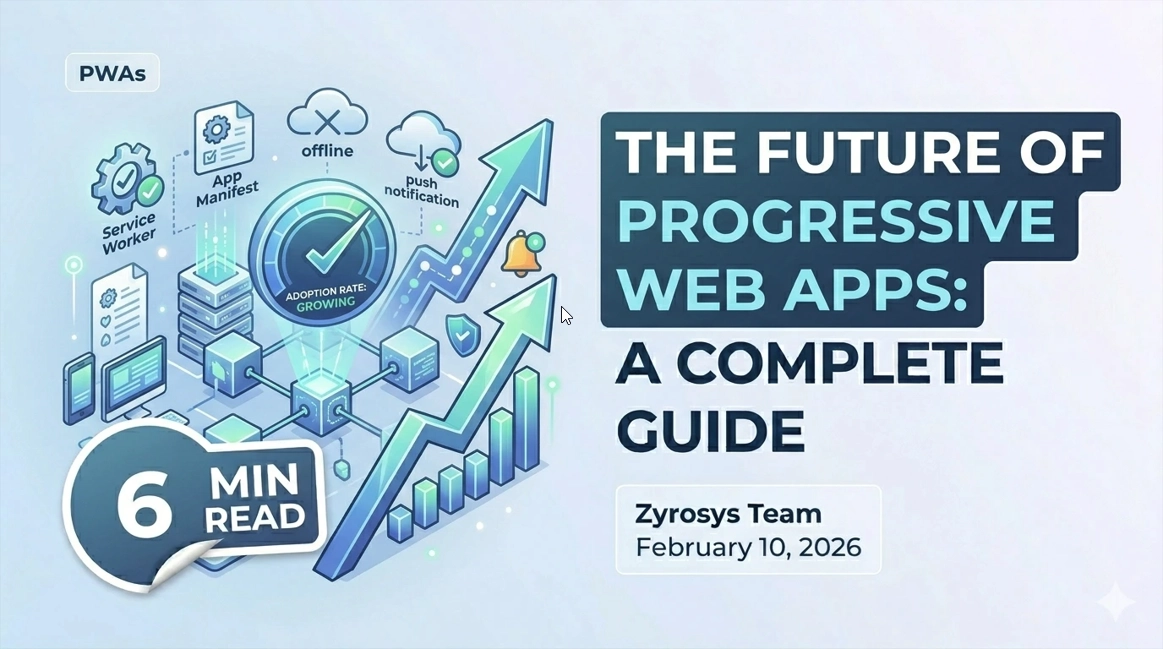
Progressive Web Apps (PWAs) represent one of the most significant shifts in web development in recent years. They combine the best of both web and native applications, offering users an app-like experience directly in their browsers.
What Makes a PWA?
Core Technologies
- Service Workers Enable offline functionality and background sync
- Web App Manifest Provides installability and app metadata
- HTTPS Required for service workers to work
Key Features
- Offline Functionality: Works without an internet connection
- Installability: Can be installed on any device
- Push Notifications: Re-engage users with timely updates
- App-Like Experience: Smooth animations and gestures
- Responsive Design: Works on all screen sizes
Benefits for Businesses
Increased Engagement
PWAs see significantly higher engagement rates compared to traditional websites. Users spend more time and view more pages.
Better Conversion Rates
The app-like experience leads to higher conversion rates. Users trust installed apps more than websites.
Lower Development Costs
A single PWA works across all platforms, eliminating the need to develop separate iOS and Android apps.
Improved Performance
PWAs load faster than native apps in many cases, leading to better user retention.
The Future of PWAs
- Enhanced Capabilities: More native APIs are being exposed to web apps
- Improved Tools: Development tools continue to mature
- Wider Adoption: More businesses are recognizing the value
- Platform Integration: Better integration with operating systems
Getting Started
Building a PWA doesn't require learning new languages—just enhancements to your existing web development skills. Start with a solid service worker strategy and a well-defined manifest.